
Pennsylvania measles outbreak cases can worry families. Learn key symptoms, warning signs, exposure risks, prevention tips, and ways to protect your loved ones.
Measles is serious, but it is also something we know how to handle. Understanding how the virus travels, what early symptoms look like, and what steps to take if you suspect an exposure will help you protect your family with confidence rather than fear.
What Is Measles, Exactly ?( measles Outbreak )
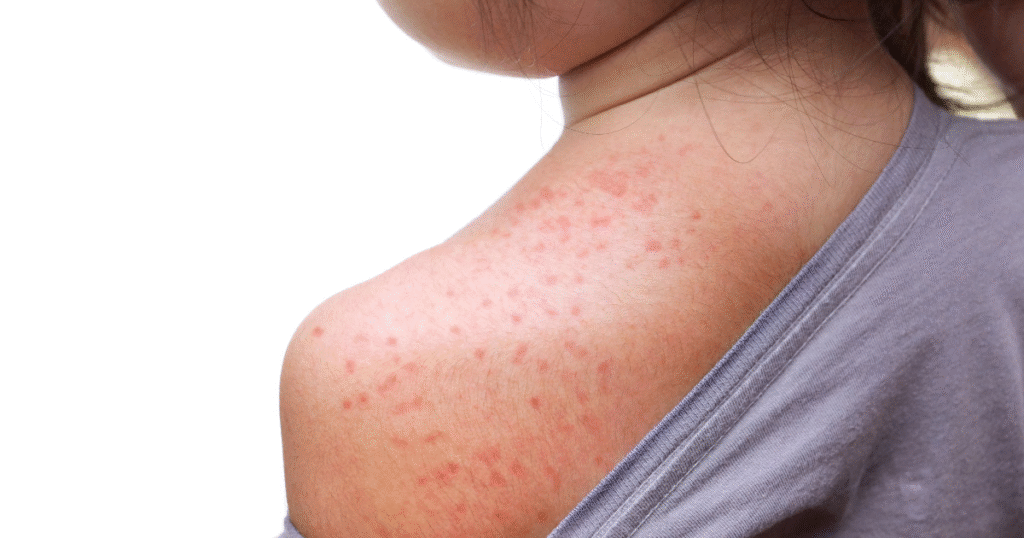
Measles is a respiratory infection caused by a virus. While most people associate it with its famous red skin rash, it is actually a full-body illness that starts in the lungs and airways before spreading throughout the system.
What makes public health officials take measles so seriously is its unmatched ability to spread.
To put it in plain terms: most everyday bugs, like the seasonal flu, spread from one sick person to just one or two others. Measles operates on an entirely different level. If a single person has measles in a room of ten unvaccinated people, nine out of those ten will catch it.
It is one of the most contagious airborne viruses known to medical science.
How Measles Travels Through a Community
Understanding how measles spreads explains why public health departments issue alerts about specific places—like a local grocery store, an airport gate, or a doctor’s waiting room.
Measles moves primarily through the air:
- It stays floating: When an infected person coughs, sneezes, talks, or breathes, tiny virus particles spray into the air. Unlike heavier cold germs that quickly drop to the ground, measles particles stay suspended in the air for up to two hours after the sick person has walked away.
- It spreads before you see a rash: A person with measles becomes contagious roughly four days before their signature red rash even breaks out. That means people often go about their daily routines—going to work, school, or shopping—without realizing they are spreading the virus.
- Surfaces matter, too: The virus can land on door handles, counter tops, and toys, remaining active for several hours.
What Is Happening in Pennsylvania?
When measles cases pop up in Pennsylvania—whether in major metro areas like Philadelphia or Pittsburgh, or in quiet rural townships—state and county health teams immediately jump into action.
They launch what is called contact tracing. Investigators interview the patient, build a timeline of everywhere they went while contagious, and publish exposure notices so the public knows if they might have been in the same room at the same time.
A Quick Word on Staying Informed
During a local outbreak, rumor mills on social media run wild. Old posts get shared as fresh news, and false case counts can cause unnecessary panic.
If you want the real, up-to-date picture of what is happening in your area, skip the social media comments and check official updates directly from:
- The Pennsylvania Department of Health (PADOH)
- Your local county or municipal health board
- The Centers for Disease Control and Prevention (CDC)
Spotting the Early Signs: The “3 Cs”
Measles doesn’t pop up instantly after you are exposed. There is an incubation period of 7 to 14 days (sometimes up to 21 days) where a person feels completely fine while the virus quietly builds up inside the body.
When the illness finally starts, it doesn’t begin with a rash. It starts off looking just like a bad winter cold or a rough case of the flu.
Phase 1: The Early Symptoms
The first phase usually comes with a sudden high fever (which can climb over 104°F) alongside three classic symptoms doctors call the “Three Cs”:
- Cough: A persistent, dry cough that doesn’t let up.
- Coryza: Heavy congestion and a constantly running nose.
- Conjunctivitis: Red, watery, irritated eyes that feel sensitive to light.
The Mouth Sign: Koplik Spots
A few days into these cold-like symptoms—right before the main body rash appears—tiny spots often pop up inside the mouth. Known as Koplik spots, they look like microscopic grains of salt surrounded by small red rings on the inside of the cheeks. If a doctor sees these, it is a dead giveaway for measles.
What Does the Measles Rash Look Like?
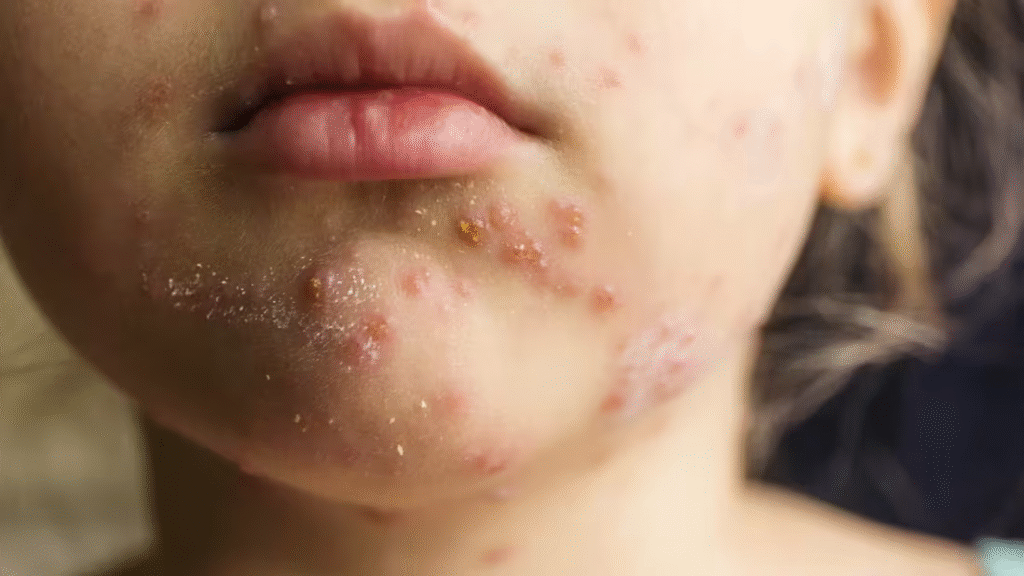
About 3 to 5 days after the fever and cough start, the main rash finally makes its appearance.
- Where it starts: It almost always begins on the face—around the hairline, behind the ears, and on the forehead.
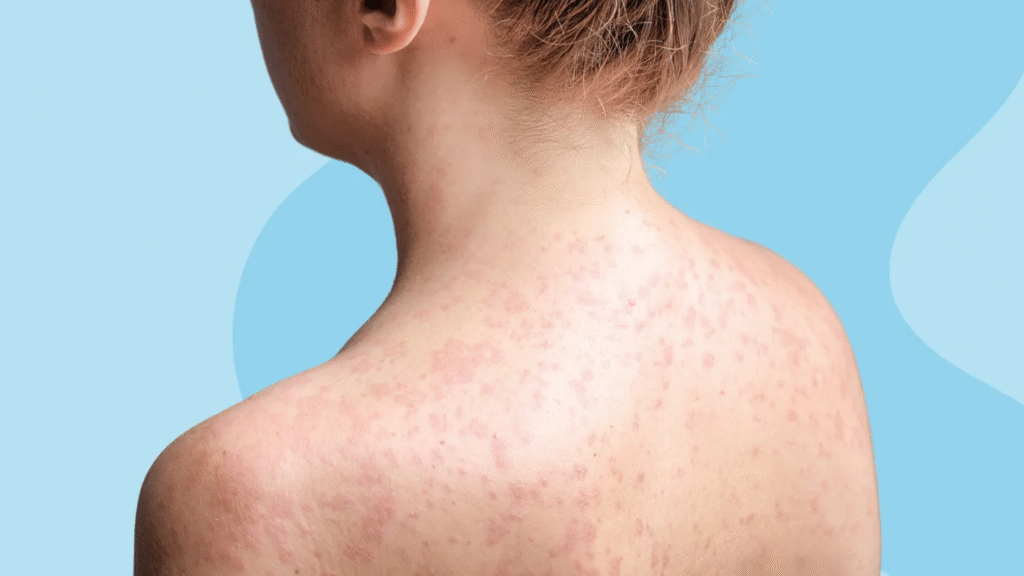
- How it spreads: Over the next couple of days, it travels down the body like a spilling liquid—moving across the neck, down the chest and back, over the arms, and finally reaching the legs and feet.
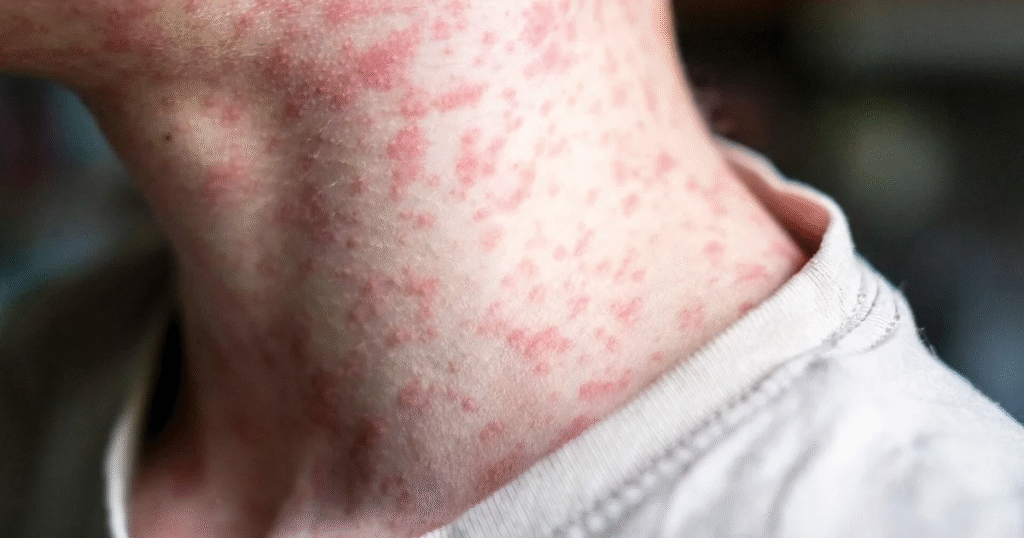
- What it looks like: It starts as flat, reddish spots. As it grows, small raised bumps might pop up on top of the spots, causing them to join together into blotchy, splotchy patches.
- How it fades: The rash lasts about 5 to 6 days and fades in the exact same order it arrived—disappearing from the face first and the feet last.
How Long Is Someone Contagious?
A person infected with measles can pass it to others for a window of about 8 days total:
- 4 days BEFORE the rash appears
- 4 days AFTER the rash appears
This is why isolation has to happen the second measles is suspected, rather than waiting a few days to see if a full-body rash develops.
Why Measles Is More Than “Just a Rash”
For many people, measles is a miserable week or two in bed followed by a full recovery. But it is a mistake to think of it as just a mild childhood illness. Measles temporarily wipes out parts of the immune system’s memory, leaving the body wide open to secondary health complications.
| Common to Moderate Complications | Severe & Dangerous Complications |
| Middle Ear Infections: Can cause severe ear pain and, in bad cases, permanent hearing loss. | Pneumonia: A severe lung infection that is the leading cause of measles-related death in young kids. |
| Severe Diarrhea: Can lead to rapid dehydration, especially in toddlers. | Encephalitis: Brain swelling that can cause high fevers, seizures, and long-term disability. |
Who Needs Extra Protection?
While anyone without immunity can contract measles, complications strike hardest among:
- Infants under 12 months (who are too young to get their first scheduled vaccine).
- Pregnant women (infection raises the risk of early labor or low birth weight).
- People with weakened immune systems (such as those undergoing cancer treatments).
The Best Defense: The MMR Vaccine
The standard MMR (Measles, Mumps, Rubella) vaccine is one of the most effective tools in modern medicine.
The Standard Schedule for Children
Kids routinely get two doses of the MMR shot:
- First Dose: Given between 12 and 15 months old (protects about 93% of kids).
- Second Dose: Given between 4 and 6 years old before starting kindergarten (brings protection up to roughly 97%).
What About Adults and Vaccinated People?
- Adults: Most adults born before 1957 got measles naturally as children and are considered immune for life. Adults born after 1957 should double-check that they have at least one documented dose of MMR in their medical records (or two doses if they work in healthcare, schools, or travel often).
- Can vaccinated people still get it? It is rare, but possible. About 3 out of 100 fully vaccinated people might still catch measles if exposed to a heavy dose of the virus. However, their illness is almost always much milder, passes faster, and rarely leads to complications or hospital visits.
What to Do If You Think You Were Exposed
If you get a notification that you or your child were in an exposure location, don’t panic. Take these calm, methodical steps:
- CALL FIRST—Do Not Just Walk In: If you or your child have a fever and rash, do not walk directly into a clinic, urgent care, or emergency room lobby. Call ahead. Tell the staff you suspect measles exposure. They will arrange to meet you at a private side door or bring you straight into an isolation room so you don’t accidentally expose vulnerable people in the waiting area.
- Contact Public Health: Call your local county health office or the PA Department of Health (1-877-PA-HEALTH). They can help confirm exposure dates and guide your next steps.
- Ask About Early Preventative Care: If an unvaccinated person is exposed, getting the MMR vaccine within 72 hours of exposure can actually prevent the illness from taking hold. For infants or pregnant individuals, doctors can administer antibodies (Immunoglobulin) within 6 days to significantly lessen the virus’s severity.
- Stay Home: If you aren’t immune or are showing symptoms, isolate at home. Stay away from public places, schools, workplaces, and family gatherings until health officials give you the clear.
The Takeaway for Pennsylvania Families
Hearing about a local disease outbreak is stressful, but accurate information is your best friend. Measles is predictable, easily identified by medical professionals, and highly preventable through simple routine vaccination.
Keep your family’s vaccination records up to date, rely on official state health updates rather than social media chatter, and always remember to call your doctor’s office before walking in if you suspect an exposure. These simple habits keep your home—and your entire community—safe.
FAQs
1. Is there a medicine that just cures measles?
Nope, there’s no magic pill that wipes out the virus once you have it. You basically just have to ride it out while your body does the heavy lifting. The main goal is keeping comfortable—drinking tons of water, taking Tylenol or Advil for the fever (just never give aspirin to kids), and dimming the lights if their eyes feel scratchy and sensitive.
2. I lost my childhood vaccine card… how do I know if I’m good?
Don’t sweat it—doctors deal with lost paperwork all the time. Your clinic can quickly look you up in the state database to see if your shots were logged. If that turns up empty, they can either run a quick blood test to see if you have antibodies, or just give you an MMR booster. It’s totally fine to get an extra shot even if you had one back in the day.
3. Can I still catch it if I got my shots years ago?
It’s super rare, but technically yeah. Two doses of the MMR shot protect about 97% of people for life. If you happen to be in that tiny 3% group where it wore off a bit, the good news is the vaccine still acts like a shield—you’d likely just get a mild, brief cold rather than ending up really sick or in the hospital.
4. How do I protect my baby if they’re too young for the shot?
Since infants can’t get their first MMR shot until their first birthday, the trick is surrounding them with a bubble of protected people. Make sure everyone holding or visiting the baby—parents, older siblings, grandparents, babysitters—is up to date on their shots. If the virus can’t get through the adults, it can’t reach the baby.
5. Why does every health alert keep telling people to “call ahead” to the clinic?
Because measles is insanely sneaky—it floats around in the air for up to two hours after a sick person walks out of a room. If you wander straight into a crowded doctor’s waiting room with measles, you could accidentally give it to a newborn or a pregnant woman sitting nearby. Calling from the parking lot lets the staff clear a path, hand you a mask, and pop you right into a private room.