
Summer is the time of year when families, kids, and dessert lovers stock up their freezers with cool treats. From classic creamy scoops to refreshing fruit bars, nothing beats the heat quite like frozen desserts. However, summer 2026 has seen a surge in voluntary product recalls from well-known brands across the United States.
Major ice cream makers like Dreyer’s Grand Ice Cream, Gifford’s Dairy, and Straus Family Creamery have recently issued voluntary recalls due to potential foreign material contamination. These materials range from tiny pieces of glass and food-grade rubber to metal fragments.
If you recently filled your freezer with ice cream or fruit bars, here is a complete guide to understanding which products are impacted, how foreign objects get into manufacturing lines, what FDA risk classifications mean, and what action steps you should take to protect your family.
Understanding the 2026 Ice Cream Recalls

When you buy a pint of ice cream or a box of fruit pops, you expect a smooth, delicious treat. Finding foreign objects like glass, rubber, or metal in packaged food is rare, but when it happens, food manufacturers and regulatory bodies act quickly to pull those items off store shelves.
Below is a clear summary of the major frozen dessert recalls announced in recent months.
| Brand | Impacted Flavors / Products | Contaminant Concern | Size & Pack Details | Key Identifying Codes | Distribution Area |
| Dreyer’s Grand Ice Cream | Outshine Fruit Bars (Strawberry, Watermelon, Grape, Tangerine, Black Cherry) | Glass pieces | 6-Count (2.5-oz bars) & 24-Count Variety Pack | Check batch code on carton packaging | Nationwide |
| Gifford’s Dairy | HomeMaine “Power Play Fudge” Ice Cream | Rubber pieces (Food-grade gasket) | 1-Quart Containers | Lot Code: 26184 UPC: 8 60864 00030 7 Best By: 08/27/27 | Massachusetts, Maine, Vermont |
| Straus Family Creamery | Organic Super Premium (Vanilla Bean, Strawberry, Cookie Dough, Mint Chip, Dutch Chocolate) | Metal fragments | Pints & Quarts | Select lot codes announced by FDA | 17 States (AZ, CA, CO, CT, FL, GA, IA, IL, IN, MD, NJ, OR, PA, SC, TX, WA, WI) |
Product Spotlight: What Went Wrong?
1. Dreyer’s Outshine Fruit Bars Recall
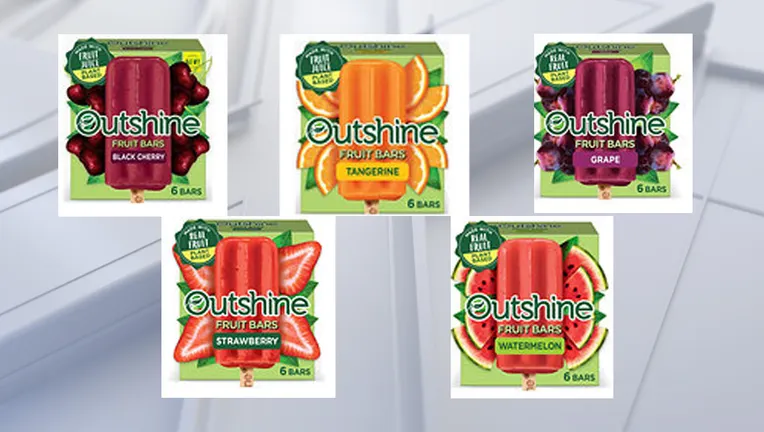
In mid-August 2026, Dreyer’s Grand Ice Cream, Inc. announced a voluntary recall affecting select varieties of its popular Outshine Fruit Bars.
- The Reason: Consumer reports indicated that small pieces of glass were found inside individual bars.
- Scope of Impact: The recall strictly covers five specific flavors of 6-count boxes (Strawberry, Watermelon, Grape, Tangerine, and Black Cherry) along with the 24-count Variety Pack. No other Outshine products, sizes, or flavors are affected.
- Safety Status: No injuries or illnesses have been reported. Dreyer’s initiated the recall out of an abundance of caution to prevent potential mouth or dental injuries.
2. Gifford’s Dairy “Power Play Fudge” Ice Cream
Gifford’s Dairy, a popular fifth-generation dairy business located in Skowhegan, Maine, issued a voluntary recall for 3,585 one-quart containers of its HomeMaine brand “Power Play Fudge” ice cream.
- The Reason: Small pieces of black rubber were detected in a small batch of product. The foreign material was traced to a food-grade rubber gasket on processing equipment that wore down and broke off during production.
- Regional Connection: Power Play Fudge was custom-crafted in 2016 as the official ice cream of the Boston Bruins hockey team. Featuring golden vanilla ice cream, fudge-filled chocolate “pucks,” and crushed cookies, it is a staple treat across New England.
- Safety Status: A small number of consumer complaints led to an immediate voluntary recall of the entire affected lot code before significant distribution occurred.
3. Straus Family Creamery Organic Ice Cream
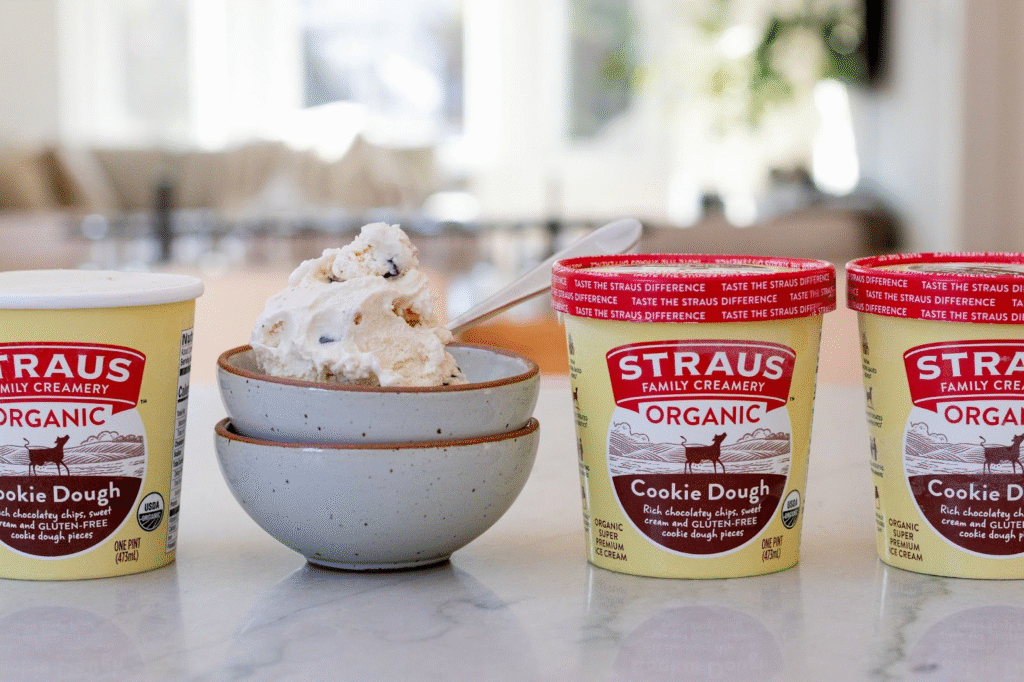
Earlier in the summer, California-based Straus Family Creamery voluntarily pulled select lots of its Organic Super Premium Ice Cream from retail shelves across 17 states due to possible metal contamination.
- The Reason: Equipment wear during the ice cream churning and filling stage introduced micro-fine metal particles into select batches.
- Scope of Impact: Pints and quarts across five classic flavors—Vanilla Bean, Strawberry, Cookie Dough, Mint Chip, and Dutch Chocolate.
How Foreign Objects Get into Packaged Food
It can be unsettling to hear that rubber, glass, or metal made its way into a box of frozen treats. However, understanding how industrial ice cream manufacturing works explains why these incidents occur—and why internal detection systems are critical.
[Raw Ingredient Intake] ➔ [Mixing & Pasteurization] ➔ [Freezing & Churning] ➔ [Packaging & Sealing]
                                                               │
                                                       (Gaskets, Belts,
                                                       Blades & Tubing)
                                                               │
                                                       [Potential Wear]
- Equipment Wear and Tear: High-speed dairy processing plants use heavy stainless-steel machinery, high-pressure rubber hoses, silicone seals, and flexible food-grade gaskets. Over time, friction, cold temperatures, and pressure can cause rubber gaskets to degrade, tear, or chip into the product stream.
- Ingredient Suppliers: Ice cream often contains mix-ins like crushed cookies, fruit ribbons, chocolate chips, or fudge chunks. Foreign material can sometimes enter the supply chain at the ingredient supplier level before reaching the main creamery.
- Glass in Production Facilities: Food plants enforce strict “no glass” policies on production floors. However, high-intensity light fixtures, observation windows, or glass jars used for liquid flavorings can occasionally break, triggering immediate isolation procedures.
FDA Recall Classifications Explained

When a company reports a voluntary recall to the U.S. Food and Drug Administration (FDA), federal health officers evaluate the situation and assign a risk classification level. Knowing what these levels mean helps consumers judge the urgency of an alert.
Class I Recall (Highest Risk)
- Definition: A situation where there is a reasonable probability that using or consuming the product will cause serious adverse health consequences or death.
- Examples: Undeclared major allergens (like peanuts or milk) in unlabeled food, severe bacterial contamination (Listeria monocytogenes, Salmonella, E. coli), or large, sharp metal/glass fragments.
Class II Recall (Moderate Risk)
- Definition: A situation where exposure to the product may cause temporary or medically reversible adverse health consequences, or where the probability of serious adverse health impact is remote.
- Examples: Soft plastic or food-grade rubber pieces (such as the Gifford’s Dairy recall), mild labeling errors, or tiny non-sharp foreign material.
Class III Recall (Lowest Risk)
- Definition: A situation where use of or exposure to the product is not likely to cause any adverse health consequences.
- Examples: Minor labeling mistakes, missing net weight declarations, or slight aesthetic flaws that break regulations but pose zero physical harm.
What Should Consumers Do?

If you suspect you have one of the recalled ice cream or fruit bar products sitting in your home freezer, follow these simple safety guidelines:
- Check Your Freezer: Look at the product brand, flavor name, package size, and UPC code. Locate the lot code or “Best By” date stamped on the bottom or side of the carton.
- Do Not Consume the Food: Even if you have already eaten part of the container without noticing anything unusual, stop eating the product immediately.
- Dispose or Return for a Refund:
- Return: Take the opened or unopened product back to the grocery store or supermarket where you purchased it for a full cash refund or store credit.
- Dispose: Throw the package directly into a secure trash bin where pets or children cannot reach it.
- Contact Customer Support:
- For questions regarding the Outshine Fruit Bars recall, call Dreyer’s Grand Ice Cream Customer Service at 1-800-392-4885 (Monday–Friday, 8:00 AM – 5:00 PM EST).
- For regional support on Gifford’s Dairy products, check the store locator or contact the store manager where you purchased the quart container.
- Seek Medical Care if Needed: If you or a family member consumed a recalled product and experience mouth discomfort, swallowing pain, or digestive trouble, consult a doctor or healthcare provider right away.
Frequently Asked Questions
1. What brands and flavors are included in these recent recalls?
The main products listed are select 6-count and 24-count boxes of Dreyer’s Outshine Fruit Bars (including Strawberry, Watermelon, Grape, Tangerine, and Black Cherry), 1-quart containers of Gifford’s Dairy “Power Play Fudge” ice cream, and specific pints and quarts of Straus Family Creamery Organic Ice Cream across five classic flavors.
2. What caused these treats to be pulled from shelves?
Each company issued a voluntary recall after discovering potential foreign objects in their production lines. Outshine Fruit Bars were recalled due to reports of glass fragments, Gifford’s Dairy recalled batches after finding bits of a food-grade rubber gasket, and Straus Family Creamery pulled items over potential metal contamination.
3. How can I quickly tell if my ice cream is affected?
Check the side or bottom of your packaging for the lot number, UPC, and “Best By” date. For instance, the recalled Gifford’s Power Play Fudge features UPC 8 60864 00030 7 and lot code 26184 with an 08/27/27 expiration date. If your numbers don’t match the specific recalled batches, your treat is safe to enjoy.
4. Has anyone gotten hurt or sick from eating these?
No injuries or health issues have been reported for any of these recall events. The manufacturers took action purely as a safety precaution after receiving feedback from a few observant consumers.
5. What should I do if I have a recalled box in my freezer?
Do not eat it. Throw the package away in a closed trash bin so pets or children can’t reach it, or return it to the store where you bought it for a full refund. For questions about Outshine products, you can reach Dreyer’s customer service directly at 1-800-392-4885.